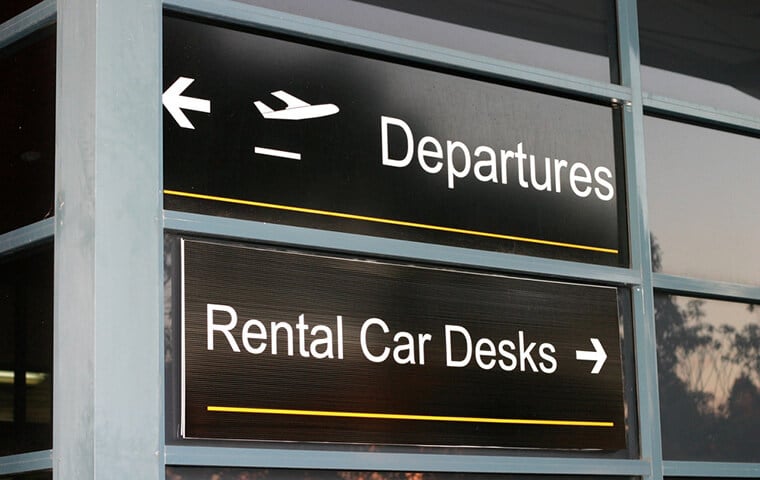
 Use of zero-emission government-furnished and rental vehicles if available as a first choice. Image: CreativeFireStock/Shutterstock.com
By: FEDweek Staff
Use of zero-emission government-furnished and rental vehicles if available as a first choice. Image: CreativeFireStock/Shutterstock.com
By: FEDweek StaffThe GSA has issued a policy bulletin on the recent OMB memo on reducing the environmental impact of federal employee travel, focusing on agency responsibilities under that memo, which focused more on employee responsibilities.
“In every case, the trip not taken is the least expensive and most sustainable. With new communication tools available to agencies, federal employees are encouraged to consider virtual attendance at a meeting or conference,” it says.
It adds that “if official travel is necessary,” agencies are encouraged to follow practices including use of rail rather than airplanes for trips under 250 miles, “particularly when the train uses electric locomotives rather than diesel . . . Cost effective rail transportation is one of the exceptions to the required use of a contract City Pair Program fare.”
Use of zero-emission government-furnished and rental vehicles if available as a first choice. For rentals, if none are available, use of hybrids is the second choice and if none of those are available, the least expensive compact car available. “Agencies may authorize a larger rental vehicle to accommodate multiple travelers authorized to travel together rather than authorizing a smaller rental vehicle for each of the travelers,” it says.
It adds: “Even before people were fully aware of the impact GHG emissions have on climate change, the federal government rarely considered POVs to be the most advantageous method of transportation. Now that the impact of GHG emissions is better known, taking steps to limit POV use, which accounts for more than half of GHG emissions from the transportation sector, is even more urgent.”
Further, “Whenever possible and geographically reasonable, when agencies determine that travel is necessary and the mission takes the traveler to multiple/consecutive TDY points, agencies should consider scheduling a single trip with multiple legs or segments, instead of returning the traveler to their official duty station and conducting individual trips to each destination.”
Once at the destination, it says, employees should be encouraged to share rides in vehicles such as taxis.
Conversions to Schedule P/C Pending; Acknowledgement Form Draws Attention
Federal Employee Survey Shows Plummeting Views on Engagement, Leadership, Performance
OPM Takeovers of RIF, Suitability Appeals Diminish Legal Rights, Unions Say
Judge Orders VA to Reinstate Union Contract for 320,000 Workers
Retirement Application Processing Backlog Nearly Doubles in Four Months
See also,
Calculating Service Credit for Sick Leave At Retirement
FERS Supplement vs The 10% Pension Bonus
How Your FERS, Social Security and TSP Payments Get Taxed
Where Should I Put My TSP in Retirement