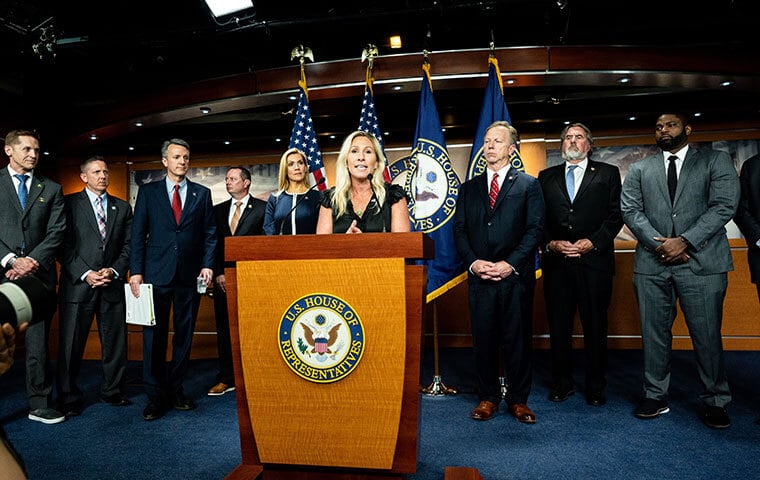
 US Capitol, June 14 2023: Rep. Marjorie Taylor Greene (R-GA) speaks at a press conference where members of the House Republican Study Committee introduced a fiscal 2024 spending proposal. Many of the proposals have been put forward in the past. Image: Michael Brochstein/SOPA Images/Shutterstock
By: FEDweek Staff
US Capitol, June 14 2023: Rep. Marjorie Taylor Greene (R-GA) speaks at a press conference where members of the House Republican Study Committee introduced a fiscal 2024 spending proposal. Many of the proposals have been put forward in the past. Image: Michael Brochstein/SOPA Images/Shutterstock
By: FEDweek StaffA caucus of the more conservative House Republican members — a majority — again have proposed a set of familiar cutbacks in federal employee benefits and restrictions on their workplace rights.
While the Republican Study Committee titled its document as a budget, it does not have a formal role in the process underway in Congress toward deciding on agency spending levels for the fiscal year that starts in October. However, it does stake out positions in favor of a number of proposals that have been raised repeatedly over the years, including:
• Ending annual across the board pay raises and shifting to a pay for performance model, while also raising the bar for paying performance-based awards.
• Basing annuities of employees who retire in the future on the average of their highest five consecutive salary years rather than the currently used three years and eliminating the defined benefit portion of federal retirement benefits for newly hired employees—in both cases, with no effective date specified.
• Increasing the required contributions toward retirement for FERS employees by an unspecified amount; past proposals would have required increases of several percent of salary.
• Reducing or eliminating retiree cost of living adjustments; basing those adjustments on an inflation measure that would produce smaller amounts; eliminating the “special retirement supplement” for FERS employees who retire before age 62 that is paid until they become eligible for Social Security at that age; reducing the interest rate in the TSP’s government securities G fund.
• Changing the formula for sharing the cost of FEHB premiums in a way that would shift more of the costs from the government onto enrollees.
The document meanwhile endorses several policies set by the Trump administration that were revoked by the Biden administration, including tighter restrictions on use of “official time”—on the clock time allowed for certain union-related purposes—while advocating reversal of Biden administration policies favorable to unions.
It also endorses expanding the grounds for firing federal employees, shortening notice periods and restricting appeal rights to internal agency channels.
Conversions to Schedule P/C Pending; Acknowledgement Form Draws Attention
Federal Employee Survey Shows Plummeting Views on Engagement, Leadership, Performance
OPM Takeovers of RIF, Suitability Appeals Diminish Legal Rights, Unions Say
Judge Orders VA to Reinstate Union Contract for 320,000 Workers
Retirement Application Processing Backlog Nearly Doubles in Four Months
See also,
Calculating Service Credit for Sick Leave At Retirement
FERS Supplement vs The 10% Pension Bonus
How Your FERS, Social Security and TSP Payments Get Taxed
Where Should I Put My TSP in Retirement