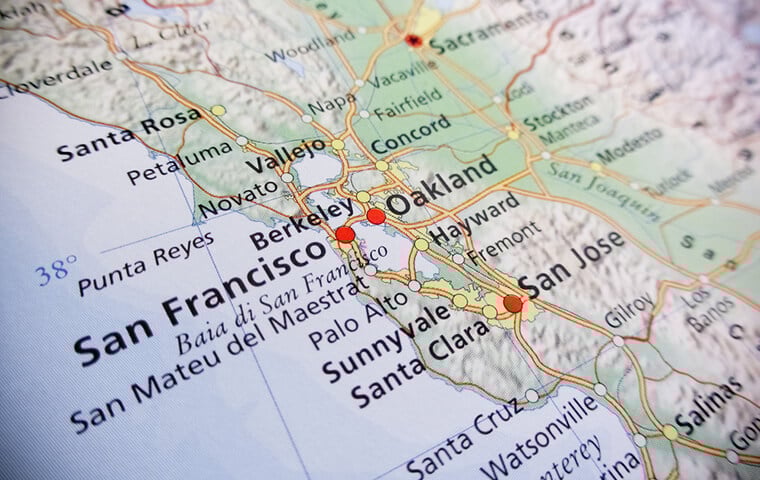
 The reported gaps traditionally have been the widest in areas including the San Francisco, New York, Seattle, Washington, D.C. and Los Angeles. Image: TonelloPhotography/Shutterstock.com
By: FEDweek Staff
The reported gaps traditionally have been the widest in areas including the San Francisco, New York, Seattle, Washington, D.C. and Los Angeles. Image: TonelloPhotography/Shutterstock.com
By: FEDweek StaffThe Federal Salary Council, the key advisory panel on federal employee pay in general—and on the GS locality pay system in particular—has scheduled its annual meeting for November 18, a session in which it releases updated figures on the pay gap between federal and private sector salaries nationwide and by locality.
The council oversees salary comparisons conducted by the Labor Department and applies a formula under law to the resulting data to calculate pay gaps, which are used in determining the differing raises among localities. Its recommendations are then passed to a higher-level group, the President’s Pay Agent, which in turn makes recommendations to the White House.
President Biden has stated his intent to set an average January 2025 federal employee raise of 2 percent by default, if Congress does not enact a figure by the end of this year; it appears that it won’t. Inaction would also effectively endorse Biden’s intent to split that raise, with 1.7 percent paid across the board and funds for the other 0.3 percentage points divided up by locality.
That division would result in raises varying by locality from several tenths of a percentage point above 2 percent to several tenths below. Exact figures would be announced in a late-year executive order finalizing the raises.
The reported gaps traditionally have been the widest in areas including the San Francisco, New York, Seattle, Washington, D.C. and Los Angeles; they would stand to receive the largest raises even though they already have the largest locality components. The smallest locality raise annually goes to the lowest-paid catchall “rest of U.S.” locality outside the designated city zones.
At last fall’s meeting, the overall pay gap was determined to be 27.54 percent, up from the 24.09 of 2022. However, the average 5.2 percent federal raise paid at the start of this year may have narrowed that gap.
The council also sets standards for when a city area should have its own locality designation and for adding outlying areas to existing localities. Creating localities or adding areas to existing ones results in a pay boost for affected employees by moving them from the “rest of the U.S.” locality into an area with its own rate.
No new localities are in the works for 2025 but the council previously recommended expanding the boundaries of 22 existing localities—an action that might be finalized in time to take effect in January, to the benefit of some 16,000 employees.
At the annual meeting the council typically hears from agency officials from several areas asking to be designated as separate localities but in most cases the required thresholds are not met.
Nearly 10,000 Federal Offices Don’t Meet Usage Standards
OPM Plan on Employee Ratings Asking for Abuse, Says Senior House Democrat
OK, FERS and TSP, but What About Social Security Retirement Income?
Conversions to Schedule P/C Pending; Acknowledgement Form Draws Attention
Senate Passes DHS Funding Deal, but Stalls in House; Trump Signs Order to Pay TSA Personnel
See also,
Calculating Service Credit for Sick Leave At Retirement
FERS Supplement vs The 10% Pension Bonus
How Your FERS, Social Security and TSP Payments Get Taxed