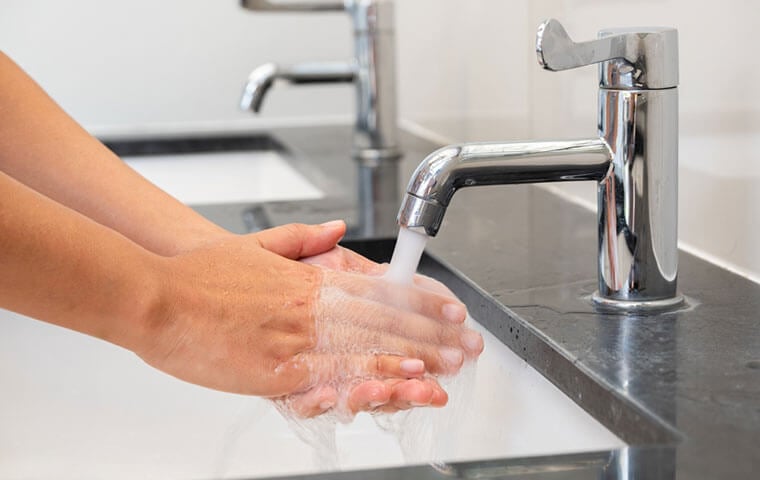
 In an earlier report on water safety the IG said agency requirements fall short and that they are carried out inconsistently and with insufficient oversight. Image: Me dia/Shutterstock.com
By: FEDweek Staff
In an earlier report on water safety the IG said agency requirements fall short and that they are carried out inconsistently and with insufficient oversight. Image: Me dia/Shutterstock.com
By: FEDweek StaffAn inspector general audit has found the Public Buildings Service is not effectively administering GSA’s fuel storage tank management program.
GSA owns or operates over 1,000 fuel storage tanks at federal facilities, and its policy is to comply with all regulatory requirements – federal, state, interstate, and local, as well as the International Fire Code and National Fire Protection Association (NFPA) codes and standards – for fuel storage tanks.
However, following site visits to five GSA regions, encompassing 25 locations, the IG said PBS does not have a complete or accurate inventory of the fuel storage tanks currently in service, and that regional personnel responsible for day-to-day operations and maintenance did not have the necessary plans to properly account for or maintain the fuel storage tanks, nor to respond to a leak or a spill.
Further, monthly visual inspections were either performed inaccurately or not saved in the system of record, and none of the five regions visited had consistently applied the NFPA guidance for signage and markings on or around the fuel storage tanks.
In another report coming on the heels of a recent audit highlighting water safety risks in federal buildings that have sat dormant – some as a result of increased telework – the GSA IG faulted the Great Lakes Region PBS-5, for failing to respond to water contamination at the McNamara Federal Building in a timely manner.
It said that as a result, building occupants were at risk of exposure to potentially harmful levels of lead, copper, and Legionella bacteria, and were not provided with critical information necessary to make informed decisions about their health and safety.
In its earlier report on water safety the IG said agency requirements fall short and that they are carried out inconsistently and with insufficient oversight, emphasizing risks posed by stagnant water.
A 2022 report said PBS “did not effectively test for water contamination” prior to reopening 71 of the 74 child care centers in federal buildings that had been temporarily closed. A 2023 report focusing just on testing for Legionella said that elevated levels were found in six buildings — including in one where the level was 640 times higher than the CDC threshold for Legionella being deemed “uncontrolled” — and warned that the risk is broader.
Nearly 10,000 Federal Offices Don’t Meet Usage Standards
OPM Plan on Employee Ratings Asking for Abuse, Says Senior House Democrat
OK, FERS and TSP, but What About Social Security Retirement Income?
Conversions to Schedule P/C Pending; Acknowledgement Form Draws Attention
Senate Passes DHS Funding Deal, but Stalls in House; Trump Signs Order to Pay TSA Personnel
See also,
Calculating Service Credit for Sick Leave At Retirement
FERS Supplement vs The 10% Pension Bonus
How Your FERS, Social Security and TSP Payments Get Taxed